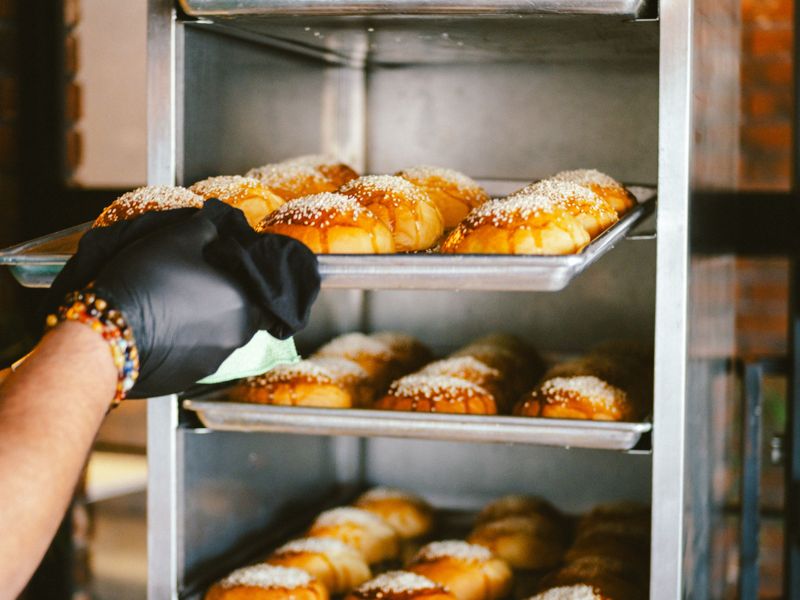
Pasties for the grocers and the delis
The business is a wholesale bakery in Auckland, making pasties and a range of pies. It supplies a national supermarket group across the North Island, a grocer, and independent delis and butchers.
The supermarket and grocer invoices go out weekly, and they’re paid at the end of the following month. The smaller accounts pay within the week, but those are much smaller invoices.
The suppliers, meanwhile, want paying weekly. So the money goes out all month and comes in at the end of the next one.
“As far as patterns go, it is usually the second and third week of the month that we run into cashflow issues.”
From an email to the FundTap team, September 2026
Weekly bills, month-end money
Earlier in the year the bakery launched a new line of pies with the grocer. A new line means more bought from the suppliers up front, more invoiced to the grocer, and a longer stretch before that money arrives.
In an email to the FundTap team, the owner explained they had launched a new line of pies with one of the grocers in July, and the cashflow was still catching up with it.
It’s a growth problem, not a sales problem. The pies were selling. The gap was between the weekly supplier bills and the grocer’s month-end payment.
“All of our suppliers are on weekly payment terms which is where the problem sits.”
From an email to the FundTap team, September 2026
Funding the grocer invoices
Their broker introduced them to FundTap, and they signed up in September 2026 and connected Xero. The invoices the owner chose to fund were the weekly ones to the grocer, to cover the cost of goods while the grocer’s payment was still a month or more away.
Margins in food manufacturing are thin, and the owner asked the FundTap team how the fee would work before going ahead. They see it on each invoice before they commit, and pay only on the invoices they fund. The grocers pay the bakery on their usual terms.
The new line kept on the shelves
With the grocer invoices funded, the suppliers could be paid on their weekly terms without waiting for month end, and the new line kept going out.
In the email, the owner also described demand from the existing stores going up and new stores coming on, with another opening the following month.
They funded nine invoices in September 2026, their first month. The bigger the order book gets, the more there is to fund, and the quieter weeks cost nothing.
“...It all seems to be working well, which is good.”
From a call with the FundTap team, September 2026
The timeline
- September 2026 Signed up, introduced by their broker, with a new line of pies launched and the suppliers paid weekly.
- September 2026 Connected Xero and chose the weekly grocer invoices as the ones to fund.
- September 2026 Funded nine invoices in their first month.
In numbers
- Weekly invoices to the grocers, paid at the end of the following month
- 9 invoices funded in September 2026, their first month
- 28th of the following month, usually, when the grocer pays
Sound like your business?
Your suppliers want paying weekly and the supermarket pays at the end of next month. Fund the invoices in between and keep the line going.
Fund the next order without waiting on the last one.
Invoice finance for makers and distributors • All case studies
